5 Tips on Staying Visible in AI-Driven Search

Businesses of all sizes and in all sectors are increasingly worried about remaining visible in the AI-driven search world we now find ourselves in. Among the most concerned may well be the micro, small and medium size businesses (SMEs) who count on search and digital visibility to allow them to ‘punch above their weight’ and remain competitive.

The vast majority of businesses in the world are SME entities – and the people running those businesses are probably wearing a lot of operational hats, are frequently pressed for time and, though they may updating their own website, most of these people aren’t necessarily technical people or digital marketing people. So, it’s entirely probably that businesses like that might want a quick checklist for of things they can action immediately and without too much heavy lifting to improve their AI visibility.

This post is for them – the people with too much to do, not enough time to do everything they want and who still need to make sure their customers (current and potential) can find them online.

The difference between what search was and what it is becoming?

AI tools like ChatGPT, and AI summaries at the top of search results such as Google’s “AI Overviews”, are changing how people find travel information and ideas. Think of the difference this way:

  • SEO (search engine optimisation) is – was? – about getting a user to click your link on a results page
  • AIO (AI optimisation) is about getting the AI to cite your information directly in its answer/summary.

5 Tips on staying visible

1. Help People Find You in Natural Language

  • Write content the way your customers ask questions (“What can families do here on a rainy day?”). Avoid keyword stuffing — write naturally and clearly.
  • Use headers and subheaders (H1, H2, etc.) along with short paragraphs so information is easy to scan.
  • Add an FAQ section that answers common visitor questions clearly.

2. Keep Information Clear, Factual, Current and – if locality is part of your USP – Specific

  • Check opening hours, prices, contact details, and accessibility info regularly. Add location details (“5 minutes from the station”, “on the coastal path”) to support “near me” searches.
  • Include your local story or expertise (“Family-run cafe using local produce”)
  • Use up-to-date photos, menus, and activity lists.

3. Strengthen Trust and Credibility E-E-A-T (Experience, Expertise, Authoritativeness, Trust)

  • AI models are trained to prioritize information that is trustworthy and authoritative. For an SME, this means proving you are a real, credible expert in your niche.
  • Add an ‘About Us’ page showing who you are, your business’s history, mission, the people behind the brand.
  • Encourage genuine reviews on Google, Tripadvisor, etc. Actively collect and display genuine customer reviews and testimonials.
  • Link to partnerships or certifications

4. Make Your Website Easy for Search Engines and AI to Read

  • Structure your content for easy quoting and clipping – AI tools are looking for clear, concise information they can extract to build their answers. Make your content easy to “quote.”
  • Include descriptive image alt text (“View of our garden café”) for accessibility and clarity.
  • Remember what I said about an FAQ and natural language? That is also a big part of quote-ability.
  • Use Lists and Tables: AIs love a bit of structured data. Use bulleted lists for features, numbered lists for steps, and tables for comparisons to competition or different price packages
  • Long page? Start with “key takeaways” a box that summarizes the main points.

5. Keep Your Listings Consistent Across Channels

  • Update your Google Business Profile with correct hours, categories, and images. Yes, yes there are other search engines – but the business reality is that the vast majority of searches are happening on Google.
  • Use the same descriptions and keywords on your website, social media, and travel platform listings. Consistency is key.
  • Review content twice a year to keep it fresh and accurate.

Summary: A lot of good SEO in the AI era is simply a matter of good digital housekeeping: clear, consistent, trustworthy, and human-centred information. The difference with AI is that it is not enough to ‘show up’ – you need to show up as a strong, well-defined entity that AI can quote in a summary answer to a question.

Tourists & Remote Workers Aren’t the Fix

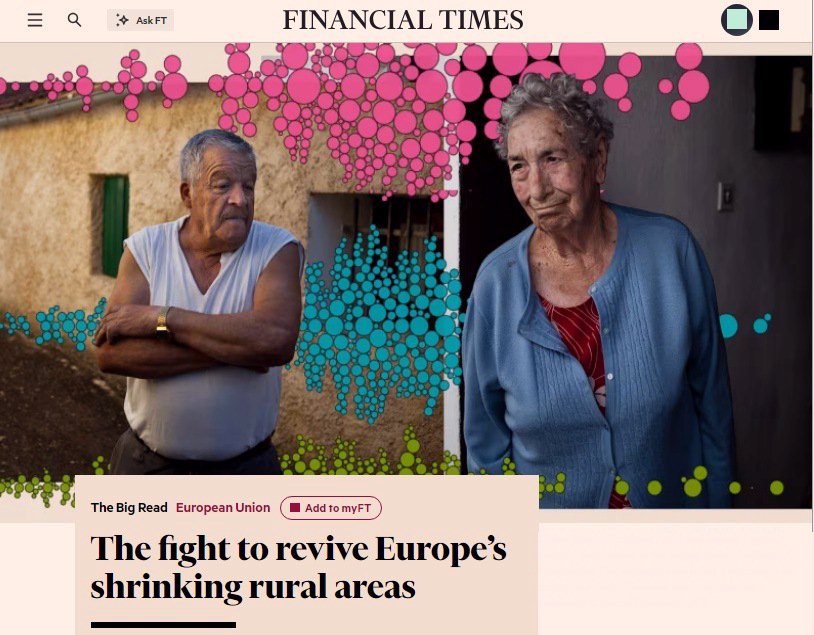
I just read an article called: ‘The fight to revive Europe’s shrinking rural areas’.

Now, strictly speaking this article from the Financial Times that I just read isn’t about tourism or destination marketing. But it’s about an issue that people keep trying to suggest tourism is gonna fix.

Look, I love a good view as much as anyone and I love visiting rural areas to get those views. I’ve even worked remotely from some. But I keep seeing people comment on this article, and articles like it, that tourism is THE answer to declining populations and community viability in those areas.

No. Tourism is AN answer, or PART of the answer. Rural tourism alone can’t revitalise shrinking towns and villages. It’s too seasonal, too subject to economic ups and down and travel trends to be a reliable, year-round solution.

That said, a lot of what needs to be done to get these areas truly tourism-ready would also make them far more liveable for remote and hybrid workers.

I know, I know people bring up remote work too all the time in these conversations. But they usually stop at, “Just make sure there’s high-speed Wi-Fi and you’re set.”

No. To be a long-term, sustainable part of a rural revitalisation effort, remote workers (and tourists, for that matter) need much more than fast broadband. They need local transport, healthcare, services, culture. More and more people are making sustainability a priority – in life and in travel so there should be incentives to update older housing stock in ways to support that. It’s about supporting not just their job but their whole life.

Places like this don’t just need regenerative tourism. They need regenerative revitalisation as well.

All of that needs to happen in collaboration with the population that IS there. This isn’t about replacement.

I’ve been a remote worker for a long time, working remotely in both dense urban areas and rural ones so I’ve seen how regenerative efforts can be incorporated into more areas of life. So, not surprised this article caught me eye this morning.

Link to the archived copy of the Financial Times article

Prompting: There’s a Right Way and a Wrong Way.

Listen, people can argue and post all they want about the dangers and/or benefits of AI but in the end, whether you use it or not is entirely up to you.

Use AI tools if you want but please, PLEASE recognise that you will get out just what you put in. Prompt in a slapdash way, you’re gonna get slapdash results. And even if you give it the most detailed prompt ever – you still need to check what it throws up in response.

Don’t just tell it to write an essay on… oh I don’t know … challah. “Write an essay on challah” is pretty vague. And you’ll get vague results.

a braided bread, also called challah, with sesame seeds on top.

Give it details:

👨‍🍳 what role you want it to assume: food writer, baker, culinary or social historian, etc.

✍ what the project is: is the essay part of the larger project? Are there existing sections to use as guides? Is the essay for a food website or a social history journal?

👨‍👩‍👦‍👦 who the audience: general educated adult reader, bakers, a local food magazine, kids?

📏 how long should it be: 300 words or 1500 words?

📣 what tone or style: is this a formal report or an informal piece?

➕ / ➖ what to include or not: different shapes, recent trends or historical references? Regional differences or focus on a specific region?

✔ Check and challenge the results.

* * * * * * * * * * * * * * * * *
And then, use it as a jump off point for your own input. If you leave it as is – trust me, people can tell.

Tips for a Better Client-Writer Partnership

Hiring a writer is like hiring an architect to build a house. You don’t just say to an architect, ‘Great – go build me a house.’ You discuss the style and size of the house, what things are important to you, what local building regulations are, etc.

There’s a partnership of sorts between you and the architect, with both of you bringing things to the table to produce the house you want.

a couple consults with their architect over a set of blue prints

Working with writers is also a partnership. So here are a few tips for clients working with writers and writers trying to address common client concerns – all to help ensure that partnership produces the results you want. Continue reading “Tips for a Better Client-Writer Partnership”

No Reason to Run Away from Content Audits

Mention the word “audit,” and many of us immediately think of stress, scrutiny, and – ARGH!!!! TAXES! Run away! Run away!

Dog running away but there's no need to run away from content audits.

But a content audit is far from a cause for alarm. In fact, a well-managed content audit improves your content management processes and enhances your digital landscape. Especially if that landscape has gotten a bit… well, overgrown.

You know how it is. You intend your content to go up as part of a planned strategy and most of the time it does. But then sometimes content expands organically; you throw something up in response to a last-minute request from sales or an article gets published ASAP in in light of unexpected events.

Over time, this organic material clutters things up with bits that no one really owns or manages. The result is content management that is more challenging than it needs to be and possibly a dilution of your brand’s message and impact.

The solution to these woes is the content audit. It’s a valuable opportunity to take stock of your existing content, understand its strengths and weaknesses, and chart a clear path forward.

Let’s demystify the content audit and talk about how it can be a positive experience for you and a positive process for your organisation.

Looking at the positive experience of a content audit Continue reading “No Reason to Run Away from Content Audits”