Tourists & Remote Workers Aren’t the Fix

I just read an article called: ‘The fight to revive Europe’s shrinking rural areas’.
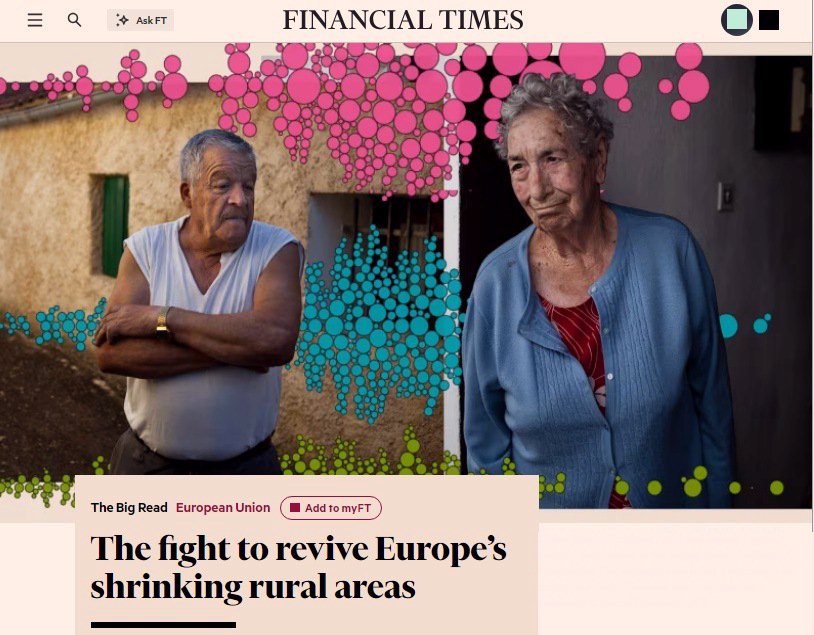
Now, strictly speaking this article from the Financial Times that I just read isn’t about tourism or destination marketing. But it’s about an issue that people keep trying to suggest tourism is gonna fix.

Look, I love a good view as much as anyone and I love visiting rural areas to get those views. I’ve even worked remotely from some. But I keep seeing people comment on this article, and articles like it, that tourism is THE answer to declining populations and community viability in those areas.

No. Tourism is AN answer, or PART of the answer. Rural tourism alone can’t revitalise shrinking towns and villages. It’s too seasonal, too subject to economic ups and down and travel trends to be a reliable, year-round solution.

That said, a lot of what needs to be done to get these areas truly tourism-ready would also make them far more liveable for remote and hybrid workers.

I know, I know people bring up remote work too all the time in these conversations. But they usually stop at, “Just make sure there’s high-speed Wi-Fi and you’re set.”

No. To be a long-term, sustainable part of a rural revitalisation effort, remote workers (and tourists, for that matter) need much more than fast broadband. They need local transport, healthcare, services, culture. More and more people are making sustainability a priority – in life and in travel so there should be incentives to update older housing stock in ways to support that. It’s about supporting not just their job but their whole life.

Places like this don’t just need regenerative tourism. They need regenerative revitalisation as well.

All of that needs to happen in collaboration with the population that IS there. This isn’t about replacement.

I’ve been a remote worker for a long time, working remotely in both dense urban areas and rural ones so I’ve seen how regenerative efforts can be incorporated into more areas of life. So, not surprised this article caught me eye this morning.


Link to the archived copy of the Financial Times article

Tips for a Better Client-Writer Partnership

Hiring a writer is like hiring an architect to build a house. You don’t just say to an architect, ‘Great – go build me a house.’ You discuss the style and size of the house, what things are important to you, what local building regulations are, etc.

There’s a partnership of sorts between you and the architect, with both of you bringing things to the table to produce the house you want.

a couple consults with their architect over a set of blue prints

Working with writers is also a partnership. So here are a few tips for clients working with writers and writers trying to address common client concerns – all to help ensure that partnership produces the results you want. Continue reading “Tips for a Better Client-Writer Partnership”

Workplace Collaboration: A Challenge or Triumph?

With a few notable exceptions, more gets done when people work together. Except for the control freaks among us (and we all know at least one), we all know that collaboration can boost productivity. If we didn’t know it, consultants tell us all the time, using phrases like ‘teams in harmony,’ ‘working on internal synergies’, etc. All that jargon-y mumbo jumbo.

So, we know it. Consultants know it. Even the control freaks know it despite being possibly uncomfortable with it. So why is collaboration often such hard work, or so difficult to get right? Well, there are a few common obstacles you’ll find in all sorts of workplaces.

graphic of a team working in collaboration Continue reading “Workplace Collaboration: A Challenge or Triumph?”

How to Ensure Remote Working Works

The recent flurry of articles about growing calls for a return to the office got me thinking. I’m sure some companies genuinely can’t break that habit, but I get the sense that at least some of the hype around this idea is coming from commercial landlords with space going spare and failing investments.

Not sure why it has to be an all-or-nothing sort of thing. More people are going into the office than, say, this time last year but we’re still seeing a lot of flexible working as well as a lot of people committed to keeping that flexibility. That means remote working isn’t going away – and that means you need to make extra sure it is producing the results you want or those calls to come back to the office will gain traction. And we don’t want that, do we?

So, how to ensure remote working works for you? Here are six things to keep in mind: Continue reading “How to Ensure Remote Working Works”

The Socially Distanced Workplace

One of the recurring themes in a lot of ‘what does the COVID-19 workplace look like’ pieces is ‘work from home, work from home, work from home.’

I work from home. I love working from home. I know lots of people who love it and lots of people who don’t like it at all. I’m also aware that lots of jobs that can’t be done entirely or even partially from home. So, let’s set aside working from home for a moment and talk about what the COVID-19 workplace looks like when it’s … well, at the workplace.

Well, it looks social distanced.

Yup, this is going to be part of the workplace workday long-term and there is no getting around it. On the assumption that we’re all operating to at least the WHO recommended standards (1 metre between people) or more (most places in the UK are working at a two-metre standard) – how do we do that?

Continue reading “The Socially Distanced Workplace”