Tourism Close to Home: Thoughts from The Banburian

I’ve just finished nearly two years at VisitEngland and what an education in tourism and destination marketing THAT was.

I was already interested in that sort of thing on a local level. I mean, what is The Banburian if not an ‘interest in place’ turned into blog and with social media channels? I’ve been at this for years now:

  • exploring the town’s history
  • mapping out itineraries featuring the surrounding areas
  • turning the spotlight on local hospitality businesses
  • throwing myself head first into English Tourism week posts
  • getting involved in mounting photo exhibitions in town and documenting the town’s calendar of events for many years for the local council
But working at VisitEngland gave me a much wider perspective on how destinations think about themselves, how they attract visitors, support the visitor economies, how different organisations work together (or sometimes don’t), and how tourism connects with everything from culture and events to regeneration and the future of the high street.
Inevitably, some of that thinking found its way back to the The Banburian.

I always wrote there as an interested local tourist, someone who enjoys being a visitor in her own town. And while all that is still true, I’ve come to realise that I’ve written more and more the past couple of years with an actual destination marketing hat on – sometimes explicitly about tourism, sometimes about placemaking, regeneration or events, but almost always with the same underlying question:  What would it look like if we thought more deliberately about Banbury as a place people might choose to visit?
So rather than reproduce those posts here, I thought I’d gather a few of them together.

  • Banbury and the MICE market: an opportunity we’re not quite claiming
    Business tourism doesn’t necessarily spring to mind when people think about Banbury. But it’s got great transport connections, have a surprising range of meeting and event spaces suitable for SME gatherings, and sits within easy reach of huge swathes of businesses. So why aren’t we making more of it?
  • Banbury’s next chapter: why the Masterplan and Town of Culture need each other
    A town that is interesting, welcoming and enjoyable for the people who live there is very likely going to be more interesting, welcoming and enjoyable for visitors as well.  That’s why I felt the two conversations around Banbury’s Masterplan (or Vision document or whatever they call these things) and its Town of Culture ambitions made sense to bring together
  • Banbury as Town of Culture? Anything’s possible
    When the possibility of Banbury becoming Oxfordshire’s Town of Culture was raised, there was much chortling on the Facebook groups. But I started thinking about what that could actually mean — not simply as a title or a programme of events, but as an opportunity to get people thinking differently about the town.
  • Staycations and the joys of local exploring
    You don’t always need to travel very far to be a tourist. Sometimes looking at the places around you with a visitor’s curiosity is enough to remind you how much you’ve stopped noticing.
  • Banbury definitely belongs at the tourism table
    Written for English Tourism Week 2025 (I write something for it every year – 2026 was a whole series), I made the case that while Banbury may not be a tourist destination in the way that Oxford, Stratford-upon-Avon or the Cotswolds are, it sits tidily between all three. That makes it a great base for exploring that also has its own history, stories, food heritage, culture and attractions.
Taken together, these posts aren’t just about tourism. They are also about how locals understand what they have, how they tell their stories and, absolutely crucially, whether they recognise opportunities that don’t fit neatly into anybody’s specific, individual remit.

And seeing how different areas deal with a lot of those questions, address a lot of challenges around them – feels increasingly like a really interesting space to explore.
Travel with Intent: Be Part of the Overtourism Solution

Overtourism has been on my mind a lot lately. I love travelling – the planning, the booking, the slow build of anticipation, and finally standing in places I’ve only read about. But I am also increasingly aware of the pressures created by large numbers of visitors to popular destinations, and what that means for the people who actually live there.

I still want to visit the world’s great cities. Rome, Barcelona, Venice, and Athens are popular for very good reasons. But I do want to think more carefully about how I move through them, and how my presence fits into the places I visit. This isn’t about guilt or not travelling; it’s about travelling in ways that feel better for me, for the people who give these places their life, and for the destinations themselves, so they remain vibrant and liveable long after I’ve left.

What do we mean by overtourism?

Overtourism isn’t just about numbers; it’s about compression. It’s about too many people, in too small a space, at the same moment. We are all nudged along the same narrow routes, often supported by infrastructure that was never designed to carry that many people so intensively for so long.

The result isn’t just crowding; it’s a kind of flattening. A three-dimensional city becomes a two-dimensional backdrop where residences are replaced with short-term lets and everyone takes the same trip, checking things off the same “must-see” list. Cities begin to feel staged, their rhythms distorted around peak visiting hours rather than lived-in time. Historic centres shift toward souvenir stands, and local food culture gets squeezed into menus designed to feed a queue rather than reflect a place.

Ironically, this often makes travel less enjoyable, as the places we came to experience become harder to actually encounter.

Spreading your impact: time, space, and economy

If overtourism is about compression, then part of the solution is surprisingly simple: spread things out. In tourism, this is often called ‘dispersal’ – spreading visitors across time and place.

While we, as individual visitors, can’t do much about grand policy, we can do an awful lot through the small decisions we make as we plan and move through a place.

Time: When you go matters

One of the simplest ways to reduce pressure is timing. This might mean:

  • Travelling in shoulder seasons rather than peak periods.
  • Choosing midweek over weekends.
  • Getting out earlier in the day or lingering later into the evening.

The same city, visited at a different time, can feel like an entirely different place. Venice at 7 am in November is not the same experience as Venice at noon in July – not in atmosphere, crowd density, or how you relate to it.

Space: Where you go (and how fast you move)

When I was living in Manhattan, someone once told me: “Visit NYC for a week, you’ll see everything. Visit for a month, you’ll see some things. Live there, and you’ll never see anything” . This is nonsense, of course – every time someone visited, they wanted to see “everything,” so I saw plenty. But I understood the point.

There’s a particular kind of low-level panic that creeps into short trips – the sense that you need to extract maximum value and tick off a list. Not only is it exhausting, but it also concentrates pressure into the same handful of places. Slowing down is the best way to change that. Stay a little longer if you can, as even a day makes a difference.

I’ve started using the “Tuesday test”: if I lived here, where would I go on a normal Tuesday? It is a useful way of breaking the checklist mentality. So is a simple wander around to get a feel for a place.

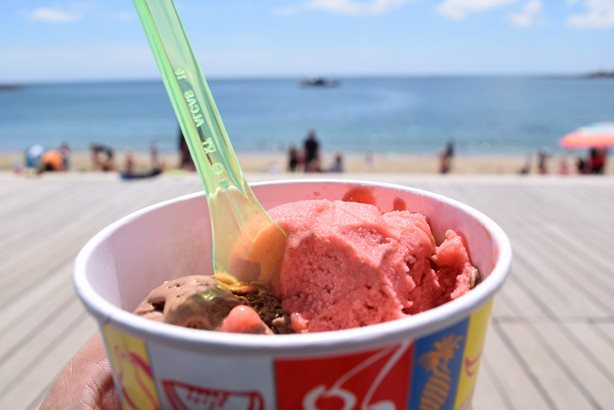
My habit of taking walks without specific destinations resulted in one of my most treasured memories of Rome: I was enjoying the sights (and a delicious gelato) when I turned a corner and simply stumbled across the Pantheon. Because I wasn’t expecting it, the memory looms far larger than if it had been a planned outing.

That same instinct – to wander a bit and see what turns up – has paid off elsewhere too.

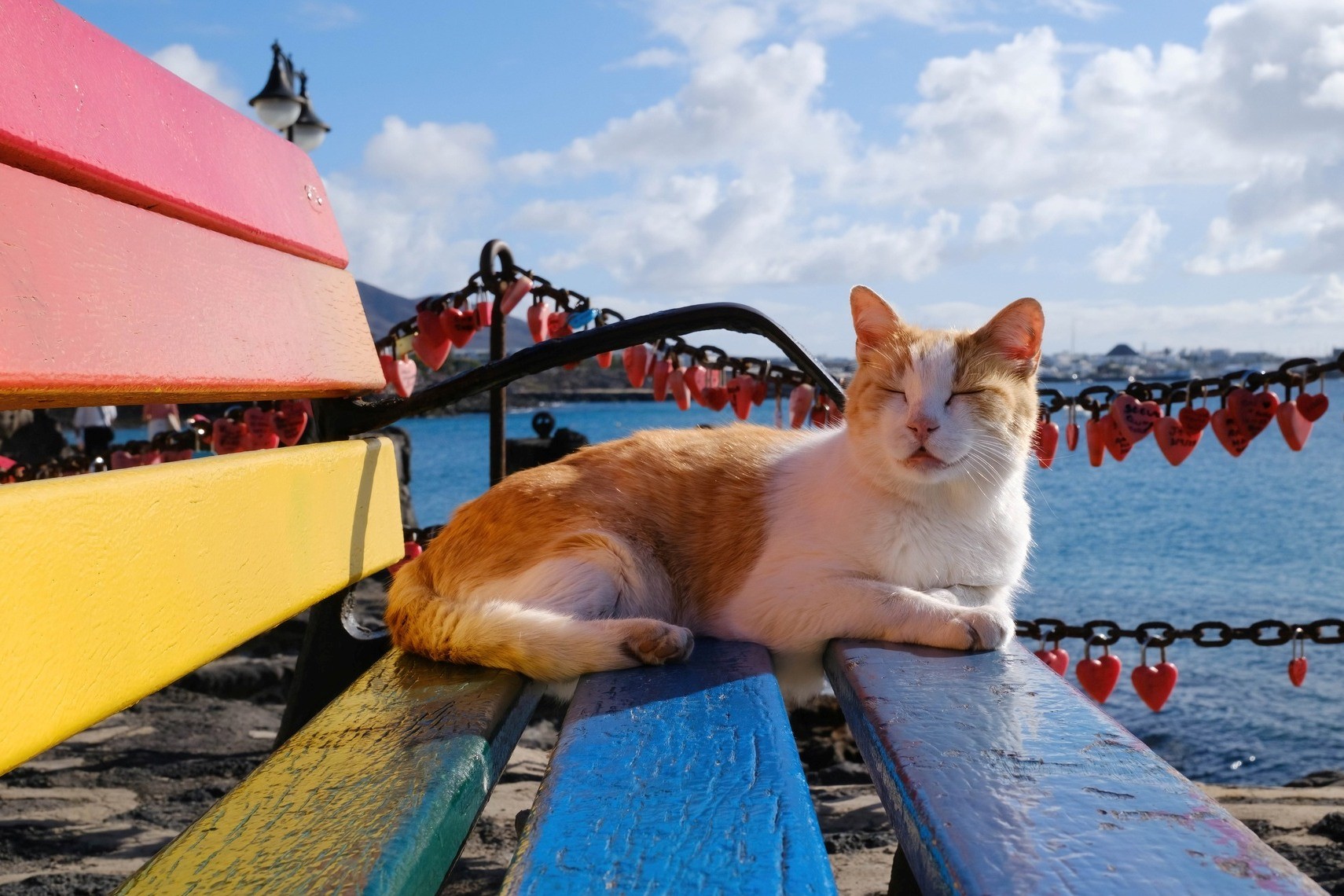
In Lanzarote, we decided to forgo the promenade after greeting the promenade cats, and head into Playa Blanca to explore the town itself and get some street photography in. We stumbled into a small café where the crowd was primarily local and which was clearly a favoured meet up spot. No sign of a queue or a “must-visit” list. The chocolate pastries were excellent, which meant we went back more than once. A chance, delicious discovery.

This adorable promenade cat in Lanzarote was a really good reason to take an early morning walk.  

Economy: Where your money goes

The pressure of overtourism is also driven by economic imbalance. Independent cafés, bakeries, and family-run restaurants tend to anchor local areas rather than disrupt them.

There is a common observation in economic development that money spent at independent businesses stays in the local economy up to 3.5 times longer than money spent at global chains. While a global brand extracts profit for shareholders, a local trattoria or bakery anchors the neighbourhood’s social and financial routine.

Another upside? You’ll usually eat better, too – which is not an insignificant side benefit.

Manners are free. Respect the process.

Timed entry systems, visitor caps, and tourist taxes can feel inconvenient, but they exist for a reason. They are not anti-visitor; they are attempts to keep places working. And though we think of them as modern nuisances, they certainly aren’t new.

Venice has managed its visitor overload for centuries. Even in the 18th century, during the Grand Tour, the city struggled to balance its lived-in reality with its status as a cultural prop. They were masters of intentional limits – regulating everything from gondola aesthetics to visitor density – to ensure the city wasn’t overwhelemed.

Paying a visitor levy today is simply a modern iteration of that old professional respect for a destination’s endurance. Accepting these limits – booking ahead or skipping an attraction because access is restricted – is a small price to pay for ensuring these places endure.

Travel thoughtfully, not timidly

I want people to keep travelling, but I want them to do it with more awareness. Approaching destinations differently has started to show up for me in small ways: I look at shoulder season options first, I build in time to wander, and I pay more attention to where my money goes.

Part of any trip should be doing what we can to ensure that long after we’ve left, these places remain vibrant for the next visitor and liveable for the people who actually call them home. Travel with curiosity. Travel with intention. That’s how you become part of the solution – and end up with a better trip in the process.

Tourists & Remote Workers Aren’t the Fix

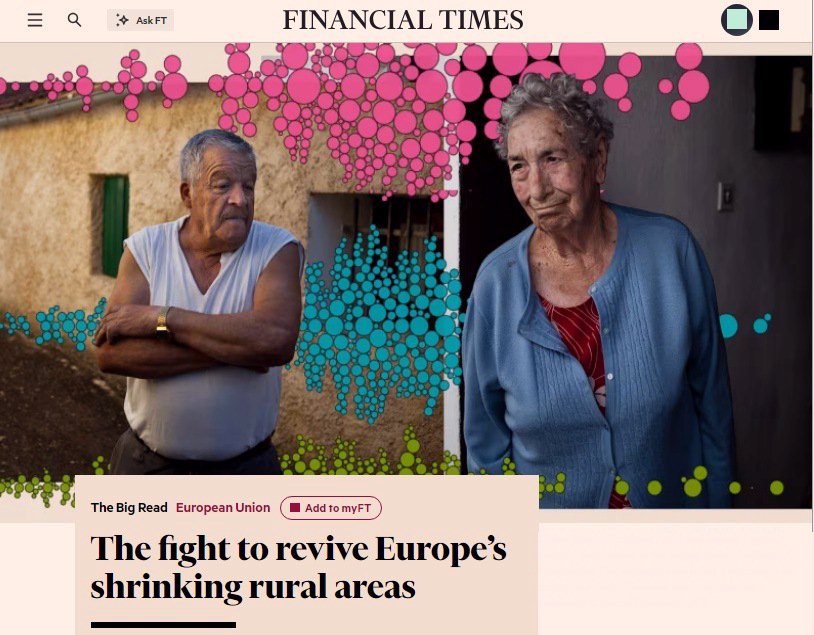
I just read an article called: ‘The fight to revive Europe’s shrinking rural areas’.

Now, strictly speaking this article from the Financial Times that I just read isn’t about tourism or destination marketing. But it’s about an issue that people keep trying to suggest tourism is gonna fix.

Look, I love a good view as much as anyone and I love visiting rural areas to get those views. I’ve even worked remotely from some. But I keep seeing people comment on this article, and articles like it, that tourism is THE answer to declining populations and community viability in those areas.

No. Tourism is AN answer, or PART of the answer. Rural tourism alone can’t revitalise shrinking towns and villages. It’s too seasonal, too subject to economic ups and down and travel trends to be a reliable, year-round solution.

That said, a lot of what needs to be done to get these areas truly tourism-ready would also make them far more liveable for remote and hybrid workers.

I know, I know people bring up remote work too all the time in these conversations. But they usually stop at, “Just make sure there’s high-speed Wi-Fi and you’re set.”

No. To be a long-term, sustainable part of a rural revitalisation effort, remote workers (and tourists, for that matter) need much more than fast broadband. They need local transport, healthcare, services, culture. More and more people are making sustainability a priority – in life and in travel so there should be incentives to update older housing stock in ways to support that. It’s about supporting not just their job but their whole life.

Places like this don’t just need regenerative tourism. They need regenerative revitalisation as well.

All of that needs to happen in collaboration with the population that IS there. This isn’t about replacement.

I’ve been a remote worker for a long time, working remotely in both dense urban areas and rural ones so I’ve seen how regenerative efforts can be incorporated into more areas of life. So, not surprised this article caught me eye this morning.

Link to the archived copy of the Financial Times article

Winter City Break: Rome

If it’s February, then it is Winter City Break time. As our city break to Porto (booked via British Airways holidays) last year had been superb, we decided to see what BA had to offer this year and this time we chose Rome.

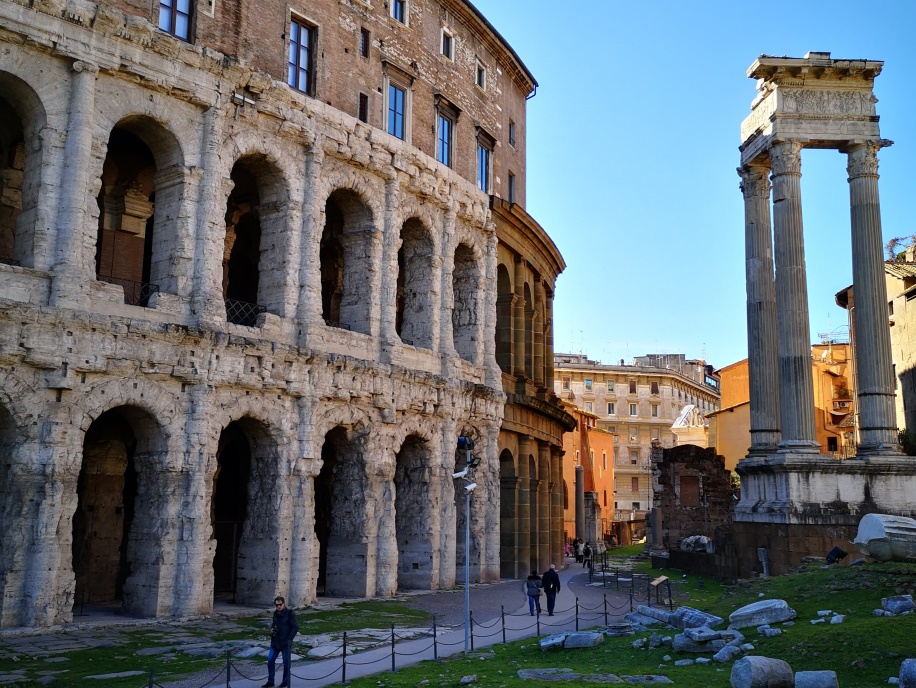
Once in every trip to Rome, there is a moment when it feels like antiquities suddenly appear out of nowhere. You are walking along and you turn a corner and WHAM – there it is with no warning. On this trip, that moment was the Theatre of Marcellus.

I’d been to many times but it was all new to ModParlPhotos. We selected a hotel near enough to all the key spots to remain walk-able but also one that wasn’t quite in the middle of it all. When we are done for the day, we are done.

So, once again, everything booked in a single go via the BA holidays website – flights (BA), car service (TMTS Rome) and hotel (Hotel Glam Rome). Continue reading “Winter City Break: Rome”

Getting Ready for Self-Catering Holidays

For several years, we went the ‘self-catering accommodation on family holiday campsite in France’ route for summer holidays. I’ve talked about the site we return to again and again before. They were the perfect solution for two adults who prefer relaxed sightseeing and reading on a lounger that are traveling with a very active youngster who’s prefer to spend the day running around on a football pitch and swimming.

When we started these trips, I’d never been to one of these holiday camps, so I wasn’t quite sure what to expect. The official information provided had a suggested list of items to bring but until you’ve been to one of these sites, you really don’t know what your family will need because everyone’s family is different.

Having been a few times now, I’m more easy-going about prep and packing. I’ve sorted out what to bring to make arrival day as easy as possible (after 5 hours in the car, you want EASY in capital letters) and what to bring to make ‘housekeeping’ quick and easy as well. That’s my mantra for these trips – quick and easy. After all, I’m on holiday. Continue reading “Getting Ready for Self-Catering Holidays”