Tourism Close to Home: Thoughts from The Banburian

I’ve just finished nearly two years at VisitEngland and what an education in tourism and destination marketing THAT was.

I was already interested in that sort of thing on a local level. I mean, what is The Banburian if not an ‘interest in place’ turned into blog and with social media channels? I’ve been at this for years now:

  • exploring the town’s history
  • mapping out itineraries featuring the surrounding areas
  • turning the spotlight on local hospitality businesses
  • throwing myself head first into English Tourism week posts
  • getting involved in mounting photo exhibitions in town and documenting the town’s calendar of events for many years for the local council

But working at VisitEngland gave me a much wider perspective on how destinations think about themselves, how they attract visitors, support the visitor economies, how different organisations work together (or sometimes don’t), and how tourism connects with everything from culture and events to regeneration and the future of the high street.
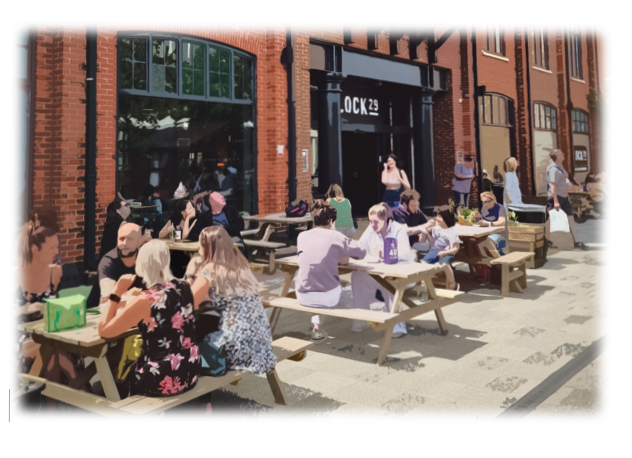
Inevitably, some of that thinking found its way back to the The Banburian.

I always wrote there as an interested local tourist, someone who enjoys being a visitor in her own town. And while all that is still true, I’ve come to realise that I’ve written more and more the past couple of years with an actual destination marketing hat on – sometimes explicitly about tourism, sometimes about placemaking, regeneration or events, but almost always with the same underlying question:  What would it look like if we thought more deliberately about Banbury as a place people might choose to visit?
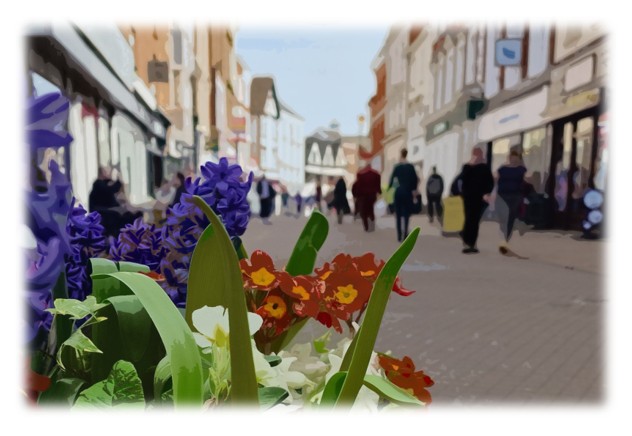
So rather than reproduce those posts here, I thought I’d gather a few of them together.

  • Banbury and the MICE market: an opportunity we’re not quite claiming
    Business tourism doesn’t necessarily spring to mind when people think about Banbury. But it’s got great transport connections, have a surprising range of meeting and event spaces suitable for SME gatherings, and sits within easy reach of huge swathes of businesses. So why aren’t we making more of it?
  • Banbury’s next chapter: why the Masterplan and Town of Culture need each other
    A town that is interesting, welcoming and enjoyable for the people who live there is very likely going to be more interesting, welcoming and enjoyable for visitors as well.  That’s why I felt the two conversations around Banbury’s Masterplan (or Vision document or whatever they call these things) and its Town of Culture ambitions made sense to bring together
  • Banbury as Town of Culture? Anything’s possible
    When the possibility of Banbury becoming Oxfordshire’s Town of Culture was raised, there was much chortling on the Facebook groups. But I started thinking about what that could actually mean — not simply as a title or a programme of events, but as an opportunity to get people thinking differently about the town.
  • Staycations and the joys of local exploring
    You don’t always need to travel very far to be a tourist. Sometimes looking at the places around you with a visitor’s curiosity is enough to remind you how much you’ve stopped noticing.
  • Banbury definitely belongs at the tourism table
    Written for English Tourism Week 2025 (I write something for it every year – 2026 was a whole series), I made the case that while Banbury may not be a tourist destination in the way that Oxford, Stratford-upon-Avon or the Cotswolds are, it sits tidily between all three. That makes it a great base for exploring that also has its own history, stories, food heritage, culture and attractions.
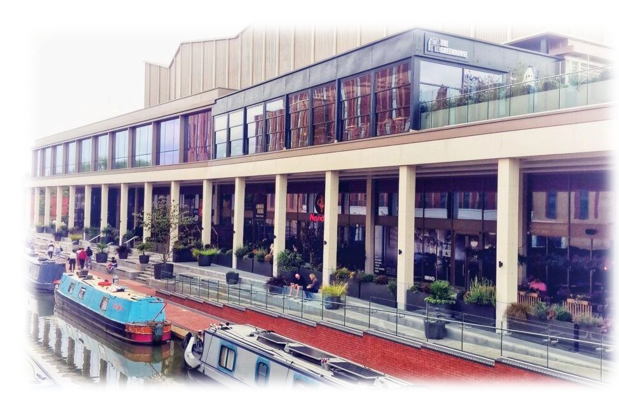
Taken together, these posts aren’t just about tourism. They are also about how locals understand what they have, how they tell their stories and, absolutely crucially, whether they recognise opportunities that don’t fit neatly into anybody’s specific, individual remit.

And seeing how different areas deal with a lot of those questions, address a lot of challenges around them – feels increasingly like a really interesting space to explore.


Prompting: There’s a Right Way and a Wrong Way.

Listen, people can argue and post all they want about the dangers and/or benefits of AI but in the end, whether you use it or not is entirely up to you.

Use AI tools if you want but please, PLEASE recognise that you will get out just what you put in. Prompt in a slapdash way, you’re gonna get slapdash results. And even if you give it the most detailed prompt ever – you still need to check what it throws up in response.

Don’t just tell it to write an essay on… oh I don’t know … challah. “Write an essay on challah” is pretty vague. And you’ll get vague results.

a braided bread, also called challah, with sesame seeds on top.

Give it details:

👨‍🍳 what role you want it to assume: food writer, baker, culinary or social historian, etc.

✍ what the project is: is the essay part of the larger project? Are there existing sections to use as guides? Is the essay for a food website or a social history journal?

👨‍👩‍👦‍👦 who the audience: general educated adult reader, bakers, a local food magazine, kids?

📏 how long should it be: 300 words or 1500 words?

📣 what tone or style: is this a formal report or an informal piece?

➕ / ➖ what to include or not: different shapes, recent trends or historical references? Regional differences or focus on a specific region?

✔ Check and challenge the results.

* * * * * * * * * * * * * * * * *
And then, use it as a jump off point for your own input. If you leave it as is – trust me, people can tell.

Being Aware of Awareness Days

I love a good awareness day. Not just because they are a fun way to flesh out a social media calendar – there’s one for nearly everything – but because I always pick up something I didn’t know every time I draft new awareness day content.

But I know they are not universally beloved. Some people dismiss them as a quick crutch if you’ve got nothing else to say. And I cannot deny that there is some truth in that. You can tell when they’ve been thrown in just because someone has run out of time, ideas, or interest.

But it doesn’t have to be like that. If you use them reasonably, awareness days are great for highlighting your brand and encouraging engagement. Just be sure that you:
Continue reading “Being Aware of Awareness Days”

Have a Happy Tortellini Day

Now, normally I’d be here talking about content audits or social media or some such. But not today. Why? Because it’s Tortellini Day and because one of the topics I write about all the time is food.

Happy Tortellini Day! To celebrate, I present just one of the many possible origin stories for this pasta-rific treat.

Lucrezia Borgia – yes, THAT Lucrezia Borgia – was travelling and stopped for the night at an inn in the small town of Castelfranco Emilia. The innkeeper was so captivated by Lucrezia that he couldn’t resist the urge later that night to peek at her through the keyhole. There were only a few candles lighting in the room so all he could see was her navel, and that, only just.

Now this might not seem a lot to you but not a lot happens in Castelfranco Emilia and a new navel was no doubt a noteworthy event. Anyway, the sight of Lucrezia’s navel sent him into ecstasy and he rushed to the kitchen and created tortellini in its image.

Or, it might have been intended to mimic the shape of a turtle – intended to echo the architecture of the area where many 17th-century buildings allude to the turtle motif.

But you know, turtle are fine in their way but they are no Lucrezia Borgia. So, I know which story I’m sticking with.

Want to see more of my food content? Head on over to Fabulous Foodie.

Searching Out Stock Photos

Does the cost of stock photography sometimes leave you reeling? Join the club! I’ve been shopping for and using stock photos for over 25 years and the price tag can leave me speechless on occasion.

While cost is very often what sends people hunting for free or cheaper sources of stock photography, there’s another reason that becomes bigger as time goes on — lack of choice. Have you noticed the same pics showing up on multiple paid sites? Me too. There’s a particular coffee cup, for example, following me from 123RF to Dreamstime, Bigstock to Canstock, Shutterstock to Deposit and back again.

So I go hunting for something that doesn’t look like the same picture everyone else is using on their content about the same topics. And even if I don’t see them everywhere, shots on the major sites can be perfectly fine but … predictable. Technically good, of course, but safe, cookie cutter … boring.

Not surprising then that we attempt to escape high cost, repetitiveness and blandness by Googling phrases like “free stock photos” or “hi-res free photos.”

Only then we find out how bad some of the “free stock photo” offerings are. Well, maybe not so shocking if you subscribe to the “you get what you pay for ” school of thought. But even taking that into account, some of them are breathtakingly bad. Luckily there are increasingly good places to find high quality, absolutely free stock photos.

All the sites below offer free high-resolution photos under a Creative Commons Zero (CC0) license which means:

  • you can copy, adapt or distribute the images for either commercial or personal use without requiring creator consent.
  • you can’t claim ownership or resell them as is.

No purchase, permission, or attribution* required. Continue reading “Searching Out Stock Photos”