Stakeholder Alignment Matters in Destination Marketing

As I mentioned in a recent Facebook post, I’ve been thinking about the role of “stakeholder alignment” when it comes to growing a local visitor economy.

It feels like a very consultant-speak sort of phrase, the kind of phrase I would normally run a mile to avoid. And the reason it feels like that is that it’s a term that appears frequently in white papers, strategy documents, growth plans and vision papers.
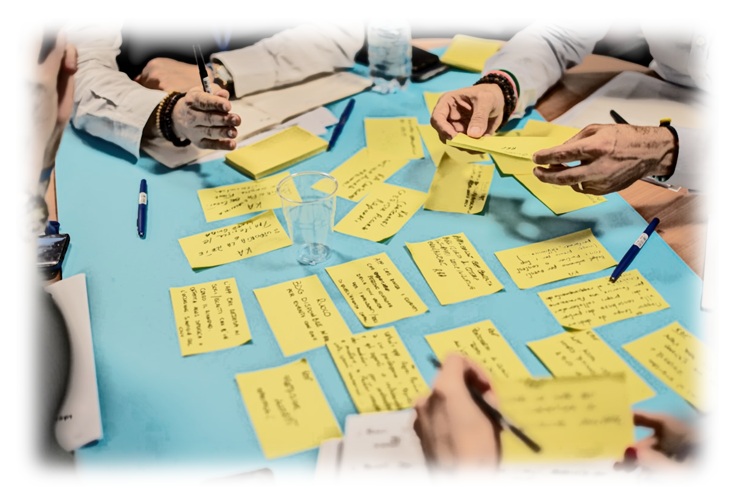
But what does it mean after the document is signed off and the press release is published? Because talking about it is one thing – but doing it is what happens after the press release.

Let’s take something very basic, incredibly simple and something that nearly everyone can identify with: social media.

Imagine a significant event is happening in a town centre. It doesn’t clash with another major local event and it will potentially bring thousands of people into town.

The Town Council didn’t organise it. Neither did the district council, BID or Chamber of Commerce.

Should they promote it? I’d argue that they should.

Not because they have a direct stake in the event, but because they have a stake in the place.

More people coming into town means potential customers for shops, cafés, pubs and restaurants. It gives residents and visitors another reason to spend time there. And a successful event contributes to the perception of the town as somewhere where things happen.

Sharing a post from the organisers costs virtually nothing. It takes seconds. But multiply that amplification across local organisations, businesses and their networks and suddenly you’ve turned the volume up considerably.

But as I’ve seen this in lots of destinations and among entities involved with their marketing and promotion, it doesn’t always happen. Sometimes organisations:

  • become territorial (‘if we talk about someone else on our feed, it’ll dilute our message’ or ‘those are OUR followers’)
  • work within very narrowly defined remits (‘we didn’t organise it, so it isn’t our job to promote it’)
  • have communications policies or organisational structures that create unintentional silos

And that’s where ‘stakeholder alignment’ would help. If everyone involved in a town’s economic, cultural and visitor development has broadly agreed on the direction of travel, somebody else’s successful event isn’t competition. It’s contributing to the same objective.

That doesn’t mean everyone has to move in lockstep. Organisations have different briefs, priorities and audiences. But there ought to be some shared understanding of the place they’re collectively trying to create – and the face they’re trying to present to the outside world.

I know, I know – all those entities were invited to chip in with their views on the growth plans and vision statements. They may have even gotten name checked in the press releases when the documents were published.

But are they bringing any of that ‘on page’ togetherness into the real world?

Does that shared vision ever influence decisions organisations make, such as:

  • Do we amplify this event?
  • Do we tell our members about that initiative
  • Can we connect these two organisations?
  • Does their success help us achieve something we’re all trying to achieve?

Because stakeholder alignment isn’t about getting your logo in a line on a strategy document.

It’s about supporting the efforts of fellow stakeholders to achieve success for the place you have a stake in.


5 Tips on Staying Visible in AI-Driven Search

Businesses of all sizes and in all sectors are increasingly worried about remaining visible in the AI-driven search world we now find ourselves in. Among the most concerned may well be the micro, small and medium size businesses (SMEs) who count on search and digital visibility to allow them to ‘punch above their weight’ and remain competitive.

The vast majority of businesses in the world are SME entities – and the people running those businesses are probably wearing a lot of operational hats, are frequently pressed for time and, though they may updating their own website, most of these people aren’t necessarily technical people or digital marketing people. So, it’s entirely probably that businesses like that might want a quick checklist for of things they can action immediately and without too much heavy lifting to improve their AI visibility.

This post is for them – the people with too much to do, not enough time to do everything they want and who still need to make sure their customers (current and potential) can find them online.

The difference between what search was and what it is becoming?

AI tools like ChatGPT, and AI summaries at the top of search results such as Google’s “AI Overviews”, are changing how people find travel information and ideas. Think of the difference this way:

  • SEO (search engine optimisation) is – was? – about getting a user to click your link on a results page
  • AIO (AI optimisation) is about getting the AI to cite your information directly in its answer/summary.

5 Tips on staying visible

1. Help People Find You in Natural Language

  • Write content the way your customers ask questions (“What can families do here on a rainy day?”). Avoid keyword stuffing — write naturally and clearly.
  • Use headers and subheaders (H1, H2, etc.) along with short paragraphs so information is easy to scan.
  • Add an FAQ section that answers common visitor questions clearly.

2. Keep Information Clear, Factual, Current and – if locality is part of your USP – Specific

  • Check opening hours, prices, contact details, and accessibility info regularly. Add location details (“5 minutes from the station”, “on the coastal path”) to support “near me” searches.
  • Include your local story or expertise (“Family-run cafe using local produce”)
  • Use up-to-date photos, menus, and activity lists.

3. Strengthen Trust and Credibility E-E-A-T (Experience, Expertise, Authoritativeness, Trust)

  • AI models are trained to prioritize information that is trustworthy and authoritative. For an SME, this means proving you are a real, credible expert in your niche.
  • Add an ‘About Us’ page showing who you are, your business’s history, mission, the people behind the brand.
  • Encourage genuine reviews on Google, Tripadvisor, etc. Actively collect and display genuine customer reviews and testimonials.
  • Link to partnerships or certifications

4. Make Your Website Easy for Search Engines and AI to Read

  • Structure your content for easy quoting and clipping – AI tools are looking for clear, concise information they can extract to build their answers. Make your content easy to “quote.”
  • Include descriptive image alt text (“View of our garden café”) for accessibility and clarity.
  • Remember what I said about an FAQ and natural language? That is also a big part of quote-ability.
  • Use Lists and Tables: AIs love a bit of structured data. Use bulleted lists for features, numbered lists for steps, and tables for comparisons to competition or different price packages
  • Long page? Start with “key takeaways” a box that summarizes the main points.

5. Keep Your Listings Consistent Across Channels

  • Update your Google Business Profile with correct hours, categories, and images. Yes, yes there are other search engines – but the business reality is that the vast majority of searches are happening on Google.
  • Use the same descriptions and keywords on your website, social media, and travel platform listings. Consistency is key.
  • Review content twice a year to keep it fresh and accurate.

Summary: A lot of good SEO in the AI era is simply a matter of good digital housekeeping: clear, consistent, trustworthy, and human-centred information. The difference with AI is that it is not enough to ‘show up’ – you need to show up as a strong, well-defined entity that AI can quote in a summary answer to a question.

Being Aware of Awareness Days

I love a good awareness day. Not just because they are a fun way to flesh out a social media calendar – there’s one for nearly everything – but because I always pick up something I didn’t know every time I draft new awareness day content.

But I know they are not universally beloved. Some people dismiss them as a quick crutch if you’ve got nothing else to say. And I cannot deny that there is some truth in that. You can tell when they’ve been thrown in just because someone has run out of time, ideas, or interest.

But it doesn’t have to be like that. If you use them reasonably, awareness days are great for highlighting your brand and encouraging engagement. Just be sure that you:
Continue reading “Being Aware of Awareness Days”

What Is Happening With Hashtags?

In a SHOCKING bucking of expected trends, I am not posting about Threads (which I imagine will get enough bandwidth today without my adding to it).

So no. Today I am posting about hashtags. Because more and more, I am coming to the conclusion that they don’t matter… or at least they don’t matter as much as they are generally assumed to.

Perhaps it’s evolutionary. Perhaps they mattered more before but they’ve become just a way to ensure I can find my own things in the future. If, for example, I want to do a round-up of an event I was doing live socials for or a monthly wrap-up…

But between posts with 30-40 hashtags and hashtags so broad in scope there is no telling what following it will turn up, they are becoming less useful as a discovery tool.

I admit this is just a feeling with a bit of my own anecdotal data from looking at socials with and without hashtags.

Does anyone else feel this way or see signs of this being the case?