The High Street’s Great Sort Out

And lo – the “experience economy” has caught up with yet another legacy brand.

154 stores is a lot of lost jobs – over 1000 of them. And none of what I am about to say is a reflection on those people who are now faced with redundancy and difficulty. None of this is down to the rank and file, public facing teams in shops across the country.

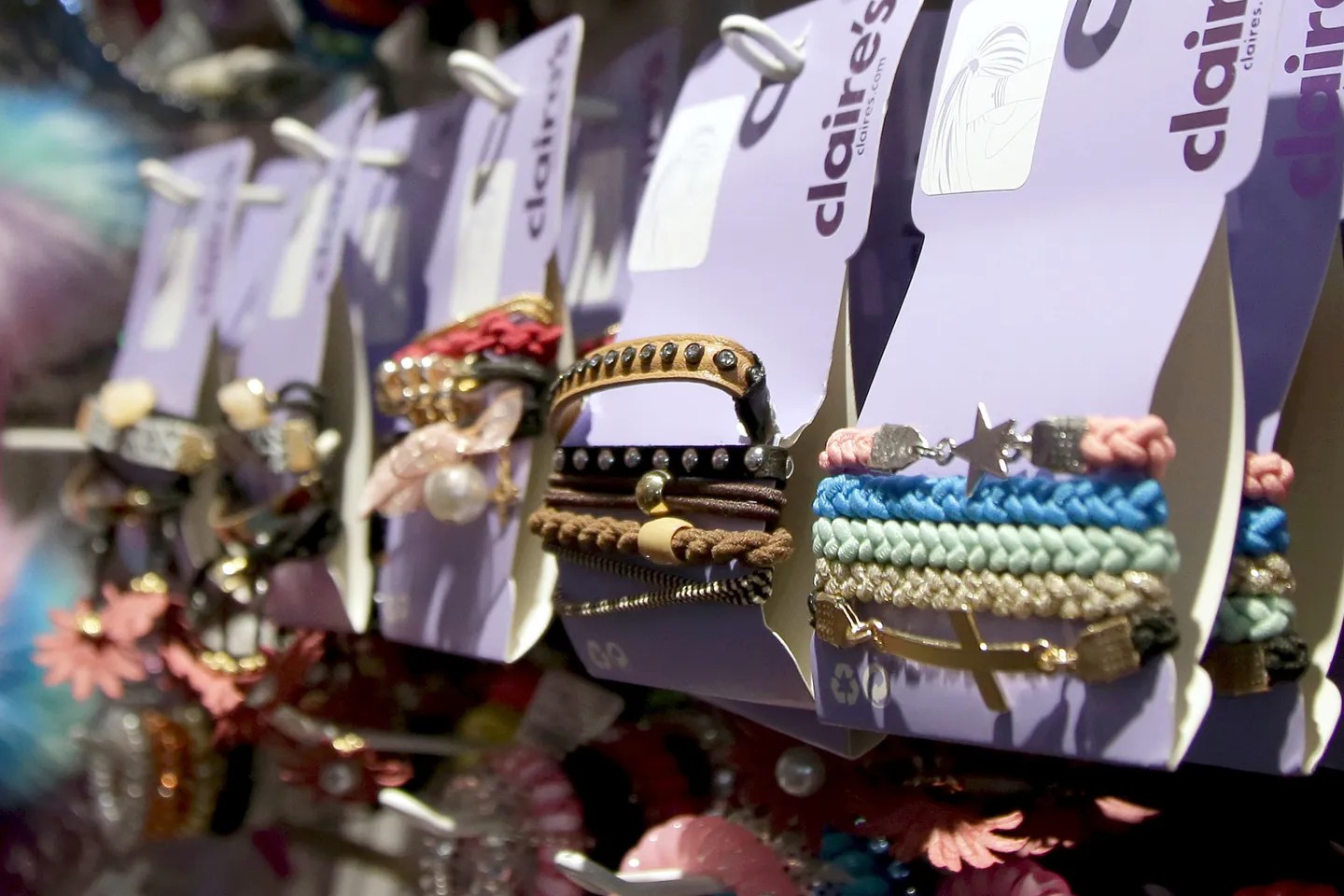
The news that Claire’s is shutting its standalone stores feels like the end of an era, but it is also an example of something we’ve been watching in slow motion for a decade.

When I moved to the UK in 2012, the high street was already beginning to fracture and the pattern continues today – shops that sell things you can buy cheaper and faster via your phone are closing, while shops offering experiences – services that involve a human touch, purchases supported by expert advice, or a bit of “story behind the sale”—are finding a footing and a following.

The shift from commodity to community

There are some retail shops that manage the shifting from “pure commodity” to “commodity+community.” – usually specialty shops where that expert advice I mentioned come into play or where they offer a service on top of retail. Locally, some examples of that are:

  • Weird Creatures (who have likely forgotten more than I will ever know about reptiles and their needs)
  • The Artery (who, in addition to art classes and demonstrations, translate art supply labels for the less artistically inclined among us with real panache)
  • Good Game (where the obvious experience is playing games but they also introduce people to new games and host themed events
  • Abraxas Cookshop (where I got fabulous advice during a discussion on spice grinders that Amazon would never have provided)

And the fact that cafes, barbers and salons are full every weekend speaks for itself. Some people may moan about them but far more people are out there using and enjoying them.

Claire’s occupied a precarious middle ground. They sold accessories (commodity) and offered ear piercing (experience). But when the commodity side of the business can be replaced by a scroll and click with next-day delivery, the “experience” has to be extraordinary to keep the lights on. And ear piercing just wasn’t enough to offset the impact of Amazon, Temu and Shein.

And that doesn’t even take into account that the teens and pre-teens that made up their traditional audience are very much NOT the teens and pre-teens of yore. But I digress. That’s another topic for another day. Back to experience economy.

Prioritising “moments” over “stuff.”

According to PwC’s 2024 analysis, leisure and experience-based categories have dominated growth, accounting for 5 of the top 9 growth categories on the high street. Consumers are prioritising “moments” over “stuff.”

Barclays’ 2024 Consumer Spend report highlighted that while essential spending slowed, “non-essential” spending on “little luxuries”—like health, beauty (manicures, hair cuts), and mood-boosting treats (a coffee and a bit of cake) —rose by 1.9% (Barclays, 2025). We still want to treat ourselves, but we want the interaction that comes with it.

We want the advice from the pet store owner, the smell of the bakery, the local story behind the brunch, or the expertise of a specialist art shop.

The shops surviving this shift are the ones that realise they aren’t just selling a product; they’re selling a reason to leave the house. If you can buy it in your pyjamas, you probably will. But you can’t download a haircut, and you certainly can’t get the “story behind the plate” from an algorithm.

The surprise isn’t that Claire’s is closing. The surprise is that in an age of conscious consumerism and the “experience economy,” it took this long.


Tips for a Better Client-Writer Partnership

Hiring a writer is like hiring an architect to build a house. You don’t just say to an architect, ‘Great – go build me a house.’ You discuss the style and size of the house, what things are important to you, what local building regulations are, etc.

There’s a partnership of sorts between you and the architect, with both of you bringing things to the table to produce the house you want.

a couple consults with their architect over a set of blue prints

Working with writers is also a partnership. So here are a few tips for clients working with writers and writers trying to address common client concerns – all to help ensure that partnership produces the results you want. Continue reading “Tips for a Better Client-Writer Partnership”

Being Aware of Awareness Days

I love a good awareness day. Not just because they are a fun way to flesh out a social media calendar – there’s one for nearly everything – but because I always pick up something I didn’t know every time I draft new awareness day content.

But I know they are not universally beloved. Some people dismiss them as a quick crutch if you’ve got nothing else to say. And I cannot deny that there is some truth in that. You can tell when they’ve been thrown in just because someone has run out of time, ideas, or interest.

But it doesn’t have to be like that. If you use them reasonably, awareness days are great for highlighting your brand and encouraging engagement. Just be sure that you:
Continue reading “Being Aware of Awareness Days”

Who Is Your Target Audience? Hint: It’s Not “Everyone.”

“Everyone” is never the answer to the question, “Who are your target audiences?”

It never ceases to amaze me when someone actually answers “Everyone” because it tells me that they’ve not thought things through.

Nothing has a target audience of everyone. I mean, if I am wrong, please let me know. But nothing comes to mind.

You don’t have to drill down too deep to start narrowing things down. Even if you do the barest minimum, you get at least three groups to focus your content a bit more. Continue reading “Who Is Your Target Audience? Hint: It’s Not “Everyone.””

Searching Out Stock Photos

Does the cost of stock photography sometimes leave you reeling? Join the club! I’ve been shopping for and using stock photos for over 25 years and the price tag can leave me speechless on occasion.

While cost is very often what sends people hunting for free or cheaper sources of stock photography, there’s another reason that becomes bigger as time goes on — lack of choice. Have you noticed the same pics showing up on multiple paid sites? Me too. There’s a particular coffee cup, for example, following me from 123RF to Dreamstime, Bigstock to Canstock, Shutterstock to Deposit and back again.

So I go hunting for something that doesn’t look like the same picture everyone else is using on their content about the same topics. And even if I don’t see them everywhere, shots on the major sites can be perfectly fine but … predictable. Technically good, of course, but safe, cookie cutter … boring.

Not surprising then that we attempt to escape high cost, repetitiveness and blandness by Googling phrases like “free stock photos” or “hi-res free photos.”

Only then we find out how bad some of the “free stock photo” offerings are. Well, maybe not so shocking if you subscribe to the “you get what you pay for ” school of thought. But even taking that into account, some of them are breathtakingly bad. Luckily there are increasingly good places to find high quality, absolutely free stock photos.

All the sites below offer free high-resolution photos under a Creative Commons Zero (CC0) license which means:

  • you can copy, adapt or distribute the images for either commercial or personal use without requiring creator consent.
  • you can’t claim ownership or resell them as is.

No purchase, permission, or attribution* required. Continue reading “Searching Out Stock Photos”